
AI Infra市场快讯 - 2026年11月12日
摘要
內容
随着AI算力扩展,传统铜线因物理距离受限,促使机柜内铜缆结合跨柜光学的混合架构率先普及。推理需求进一步推升互连网络发展。尽管面临布建挑战,先进光学技术将逐步放量,成为突破传输瓶颈的关键。
重点摘要
- 突破铜线极限:AI算力跨柜扩展使传统铜线面临物理传输距离限制,跨柜光学互连成为必然趋势。
- 混合架构为首选:考虑总体成本与延迟要求,推理系统将优先采用「机柜内铜缆、跨柜光学」的混合设计。
- 先进光学渐普及:近封装与共同封装光学将逐步进入量产阶段以降低功耗,但产业仍需克服光纤暴增的管理与实体布建挑战。
目录
- Executive Summary
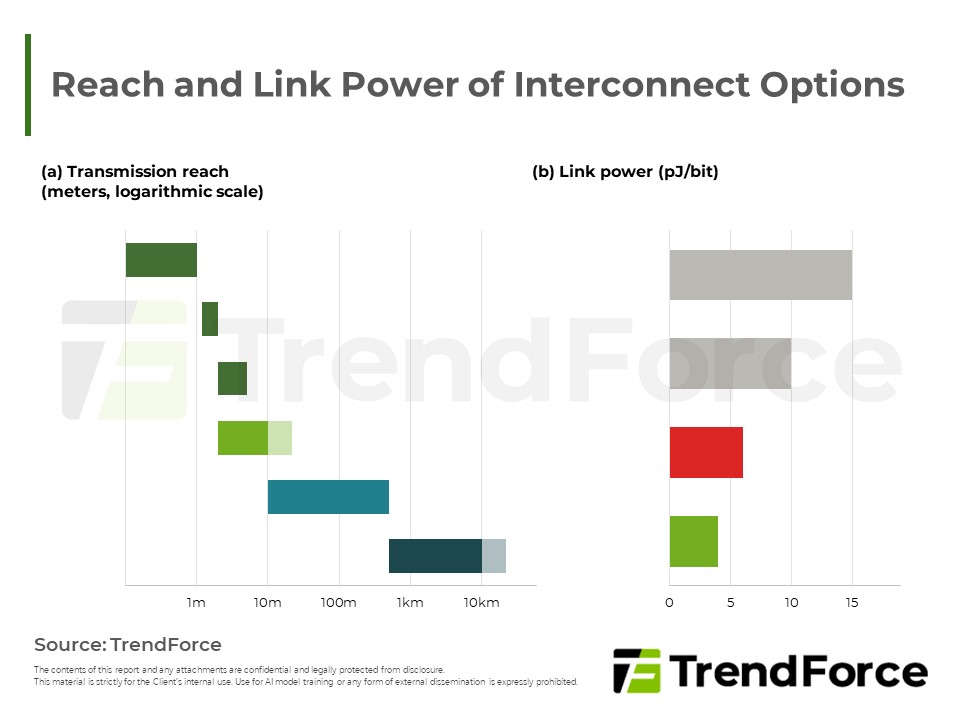
- Figure-1: Reach and Link Power of Interconnect Options
- Key Findings and Takeaways
- Figure-2: Meta Rack Platforms and Accelerators per Rack
- Table-1: Scale-Up Domain Scale: Vendor Descriptions
- Figure-3: Hybrid Copper/Optical vs. Full Optical Scale-up Pods
- Figure-4: Peer-to-peer Serving Architecture with PDC Disaggregation on CloudMatrix384
- Figure-5: TPU 8i Hierarchical Boardfly Topology
- Figure-6: Maximum Seven-hop Network Diameter via OCS on TPU 8i Pod
- Figure-7: Maia 200 Unified Ethernet Hierarchy
- Table-2: Scale-Up Domains and Deployment Scales for Training vs. Inference
- Figure-8: Interconnects for Training vs. Inference Clusters
- Figure-9: OpenAI Jalapeño Two-level Scale-up Topology
- Table-3: Specifications of the Jalapeño Two-Tier Scale-Up Architecture
- Figure-10: UB Switch System in CloudMatrix384
- Table-4: Cross-Rack Scale-Up Links and Optical Usage Across Inference Platforms
- Table-5: Reach and Power Consumption of Copper Interconnects (200G / 400G)
- Figure-11: Limitations of Passive Copper (DAC) at 200G
- Figure-12: Total Link Power and Reach Comparison, 200G
- Figure-13: Fibers and Installation Hours per Compute Rack, 2026-2028+
- Table-6: Comparison of Fibers per Rack: NVIDIA, Broadcom, and Meta
<报告页数:13>